I started my career as a plaintiff's attorney in Michigan in 2010, walking into a workers' comp practice right as the ground was shifting under it.
The Michigan Supreme Court had decided Rakestraw v. General Dynamics Land Systems back in 2003, tightening the standard for proving a work-related injury when a preexisting condition was involved. Claimants now had to show their injury was "medically distinguishable" from any preexisting pathology. But by the time I started practicing, Rakestraw was really just the headliner for a broader wave of reform that was being codified into statute. The legislature amended the Worker's Disability Compensation Act in 2011, and the changes landed right on top of my early career.
Disability got redefined around "wage earning capacity." That sounds technical, but here's what it meant in practice: if you were a construction worker with a blown-out back, the insurance company didn't just get to argue you couldn't do your job. They could argue you could do any job. A phone bank. A greeter at a retail store. Anything within your physical restrictions and transferable skills. And if they could show those jobs existed, they could reduce your benefits by what you could hypothetically earn, even if you'd never worked a desk job in your life.
So what did we have to do as plaintiff's attorneys? We had to hire vocational experts. We had to pay for them, depose them, and use their testimony to prove that our clients genuinely couldn't work, that the hypothetical jobs the insurance companies were pointing to weren't realistic given their education, their experience, their restrictions. Every single case became more expensive to litigate. Every single case required more documentation, more expert analysis, more proof. The burden of proof had shifted, and the firms that didn't adapt to that new reality lost cases they should have won.
That was tort reform. Not the kind that makes headlines on cable news. The kind that happens quietly through caselaw and statutory amendments, one shifted burden at a time, until the practice you walked into looks nothing like the one your mentors built.
I didn't know it then, but that experience was preparing me for what I'm watching happen across the country right now.
The national squeeze: tort reform in 2026
Recently, I sat in on a webinar with Andrew Finkelstein, president of the New York State Trial Lawyers Association, and the urgency in his voice was unmistakable. He wasn't talking about a hypothetical future. He was talking about tort reform proposals embedded in Governor Hochul's state budget, being negotiated in Albany right now. As of this writing, the budget is weeks past its April 1 deadline, with multiple extenders keeping the government running while Hochul and the legislature remain deadlocked. Auto insurance reform, which includes sweeping changes to how PI attorneys practice in New York, is one of the primary sticking points holding up the deal.
But here's the thing: New York isn't happening in a vacuum. And it isn't just legislative. The squeeze is coming from every direction, from state legislatures, corporate ballot initiatives, and insurance industry lobbying, and it shares a common playbook. Narrow the definition of compensable injury. Cap what attorneys can earn. Restrict how damages are calculated. Shift fault rules to benefit defendants.
If that sounds familiar to anyone who's practiced workers' comp in a post-Rakestraw world, it should. The tools are different. The playbook is the same.
What's happening in New York: Hochul’s tort reform proposals
Governor Hochul's FY 2027 Executive Budget includes three major tort reform proposals targeting motor vehicle accident cases.
The 90/180-day rule would be eliminated. Currently, under Insurance Law §5102(d), an MVA victim can recover pain and suffering damages if their injury prevents them from performing substantially all of their usual daily activities for at least 90 of the first 180 days after the accident. It's one of the most commonly used pathways for establishing "serious injury" in New York. Hochul wants to remove it entirely.
New York would shift from pure to modified comparative fault. Under the proposed rule, a plaintiff found more than 50% at fault would be completely barred from recovering non-economic damages. As Finkelstein pointed out in testimony, that means a pedestrian hit by a car and deemed 50% at fault would receive zero compensation for pain and suffering. New York currently operates under pure comparative negligence, codified in CPLR §1411, where a plaintiff can recover regardless of their degree of fault. This would be a fundamental shift.
Recovery would be barred for certain unlawful conduct. Plaintiffs operating stolen or uninsured vehicles, driving intoxicated, or committing crimes involving a vehicle would be restricted from recovering non-economic damages.
Uber has invested over $8 million through Citizens for Affordable Rates to push for the reforms. Both the NY Senate and Assembly omitted Hochul's proposals from their budget responses, which is a positive signal, but the governor has shown she's willing to hold the budget to extract concessions. She's done it five years running.
California: the corporate playbook
If New York is the legislative front, California is the corporate front, and it might be more consequential.
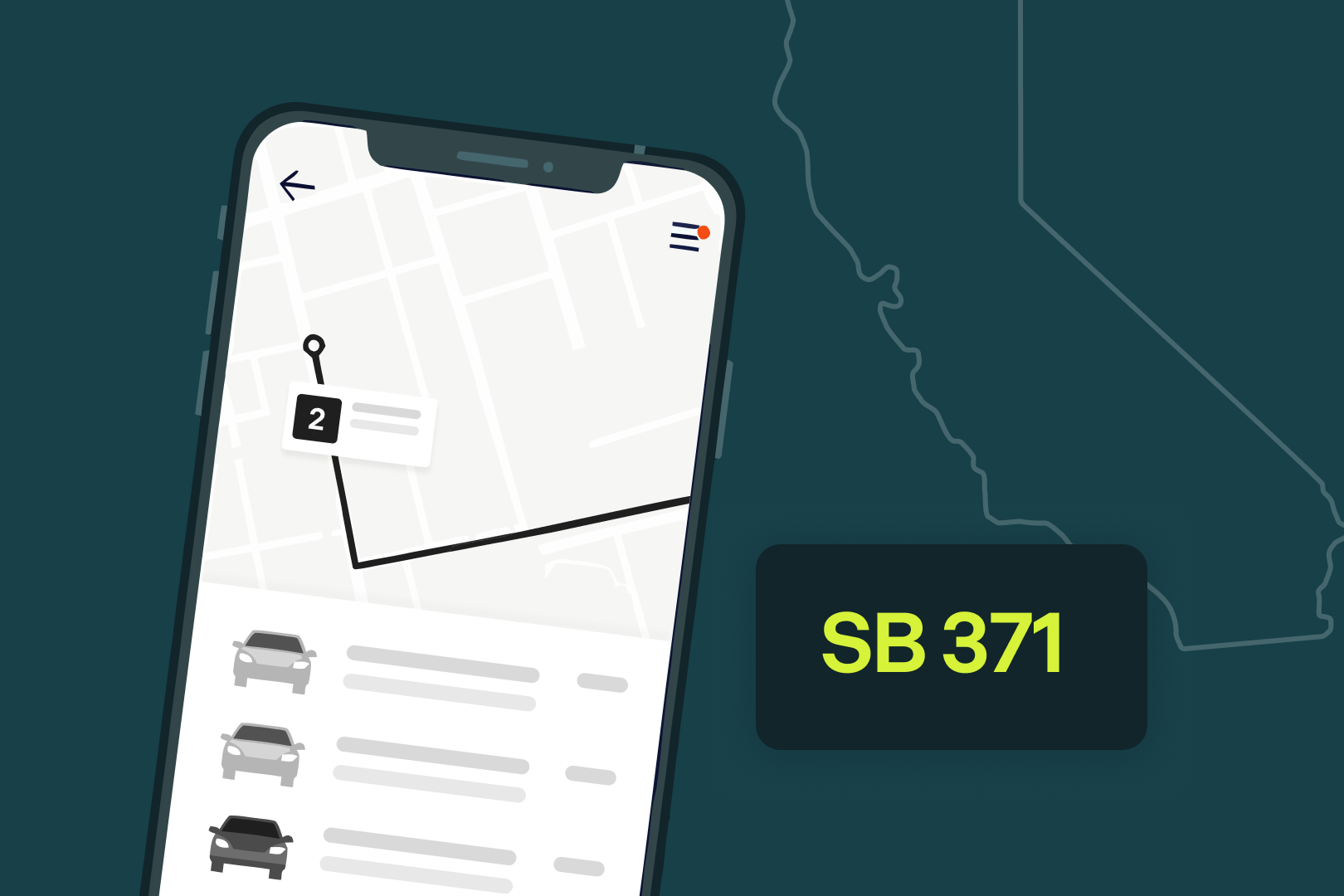
Effective January 1, 2026, SB 371 slashed required UM/UIM coverage for rideshare companies from $1 million to $60,000 per person. Cases that were once straightforward coverage plays now require precise liability determination and careful analysis of CPUC trip logs, GPS data, and driver application status.
But SB 371 is just the appetizer.
Uber filed a proposed ballot initiative for November 2026 titled the "Protecting Automobile Accident Victims from Attorney Self-Dealing Act." It would cap contingency fees at 25% of total recovery (including all case costs) for all motor vehicle accidents in California. Not just rideshare cases. All of them. It would restrict medical expense recovery. It would prohibit certain letter-of-protection arrangements. Corporate defense spending would remain completely unrestricted.
If it passes, it becomes a constitutional amendment. Uber has spent over $32 million. The opposition, led by Consumer Attorneys of California, has committed over $55 million to fight it. CAOC President Doug Saeltzer has called this a "wartime" moment for the plaintiff bar.
Supio recently hosted a deep dive on this with Bob Simon of Simon Law Group and Monica Burneikis of Burneikis Law. If you handle rideshare cases or practice in California, it's worth watching.
And here's the part that should concern every PI attorney regardless of where you practice: if the strategy succeeds in California, it becomes the playbook for every state in the country.
States that have already gone through tort reform
While New York and California are still fighting, other states have already crossed the line.
Florida passed HB 837 in March 2023. Plaintiffs found more than 50% at fault are barred from recovery. The statute of limitations for negligence was cut from four years to two. Medical damages evidence is limited to amounts actually paid. One-way attorney fees were eliminated in most first-party cases. The Florida House tried to roll back several provisions in 2025, but the Senate and Governor DeSantis blocked the efforts. The 2026 session is live right now with another round of attempts.
Georgia signed SB 68 and SB 69 into law in April 2025. Phantom damages eliminated. Seatbelt evidence admissible. Trials can be bifurcated. Anchoring in closing arguments prohibited. Third-party litigation funders must register as of January 1, 2026.
Louisiana adopted modified comparative fault effective January 1, 2026 with a 51% bar. South Carolina abolished joint and several liability for most defendants, also effective January 1, 2026.
The pattern is unmistakable.
The pattern every PI firm needs to see
These aren't isolated reforms. They share a common architecture, and if you've lived through any version of it (like I did in Michigan), you'll recognize the moves:
Raise the bar on fault. Modified comparative fault with a 50% or 51% bar is now the rule in the majority of U.S. states. The number of pure comparative fault states is shrinking. Florida left in 2023. Louisiana left in 2026. New York is proposed. Every time a state flips, fault allocation becomes the entire ballgame.
Restrict damages to real economics. The gap between what providers bill and what insurers pay, "phantom damages," is gone in Florida, Georgia, South Carolina, and targeted by the California ballot initiative. Demand packages built on inflated billing no longer work.
Narrow compensable injuries. New York's proposed elimination of the 90/180-day rule is the most dramatic example. The direction is the same everywhere: fewer pathways to non-economic damages, higher thresholds to clear.
Squeeze the economics of representation. California's proposed 25% fee cap would make it economically unviable for attorneys to take complex cases. Florida's elimination of one-way attorney fees has already shifted incentives. This is the same pressure I saw in Michigan workers' comp: when the burden of proof goes up, the cost of litigating each case goes up with it.
Compress timelines. Florida's two-year statute of limitations has forced firms to move faster on everything. Firms that are slow lose cases permanently.
What this means operationally
I've talked to a lot of PI firms over the past year. The ones navigating this well share a few things in common.
They evaluate cases faster and more precisely. When the statute of limitations is two years instead of four, and when marginal cases no longer pencil out, firms can't afford slow intake. They need to know quickly whether a case is viable, what the liability picture looks like, and whether the medical records support the categories that still survive reform.
They find value others miss. When you can't rely on inflated billing to anchor your demand, the medical records themselves become the primary value driver. Every missed treatment, every gap in care, every diagnostic finding that supports the permanent injury categories that matter. The volume of records hasn't gone down. The precision required to extract value from them has gone way up.
In Michigan, the answer was hiring vocational experts and spending more per case on proof. That worked for a while, but it was expensive and slow. Today, the answer is different. AI-powered platforms like Supio are helping firms adapt to exactly this kind of environment. When the margin for error is shrinking, having an end-to-end AI litigation assistant that can analyze thousands of pages of medical records, flag treatment gaps and missing bills, generate source-linked chronologies, and draft demands built on verified case data isn't a luxury. It's how you stay competitive.
One firm ran a case through Supio that was heading toward a $25,000 settlement. The platform found missed treatments and undocumented care that changed the entire case picture. That case ultimately settled for $250,000. That's not magic. That's what happens when you have the tools to find what's actually in the records.
The firms that will thrive
I've seen this movie before. The rules changed in Michigan, and the attorneys who adapted their operations, who invested in the right experts and built more rigorous case preparation workflows, were the ones who survived. The ones who kept doing things the old way watched their cases collapse under the new burden of proof.
The same thing is happening now, just at a national scale and at a faster pace. Whether or not every proposed reform passes in every state, the macro direction is set. The environment for plaintiff PI practice is getting more demanding in ways that directly affect how cases are evaluated, prepared, and resolved.
The firms that will thrive are the ones that treat this moment as an operational challenge, not just a political one. Yes, support your state trial lawyers associations. Yes, call your legislators. But also take a hard look at your case evaluation pipeline, your medical record review process, and your demand preparation workflow.
Ask yourself: if the rules change tomorrow, are we ready?
The best firms I've talked to aren't waiting for the answer. They're building it now.
FAQ
1. "Which states have passed tort reform, and which are fighting it now?"
As of early 2026, Florida (HB 837, 2023), Georgia (SB 68 and SB 69, April 2025), Louisiana (modified comparative fault, January 1, 2026), and South Carolina (joint and several liability reform, January 1, 2026) have passed significant tort reform. New York and California are the two biggest active fights. New York is negotiating Hochul's FY 2027 budget proposals right now, and California is heading toward Uber's November 2026 ballot initiative.
2. "What's the difference between pure and modified comparative fault?"
Under pure comparative fault, an injured plaintiff can recover damages no matter how much fault they share, with the recovery reduced by their percentage. Under modified comparative fault with a 50% or 51% bar, a plaintiff found more than that percentage at fault is barred from recovering non-economic damages entirely. New York currently uses pure comparative fault under CPLR §1411. Florida switched to modified in 2023. Louisiana switched in 2026.
3. "What should PI firms do to prepare for tort reform?"
The firms adapting well share three operational shifts. First, faster and more precise case evaluation, because shorter statutes of limitations and tighter economics mean slow intake costs cases. Second, deeper value extraction from medical records, because when inflated billing no longer anchors demands, the records themselves become the primary value driver. Third, demand preparation built on verified case data rather than assumption. The common thread is treating tort reform as an operational challenge, not just a political one.
Angela Ventro is a former plaintiff's personal injury attorney and Account Executive at Supio, an end-to-end AI litigation assistant for plaintiff PI firms. To learn more about how firms are adapting to the changing tort reform landscape, check out Supio's recent webinar on Uber's attack on victim rights and how AI can help PI firms fight back.