How CAOC Is Fighting Uber’s Effort to Strip Accident Victims of Their Rights - and How AI Can Help PI Firms Fight Back
CAOC President Doug Saeltzer and Monica Burneikis break down Uber's fight to limit accident victims' rights — and what every plaintiff firm needs to know.
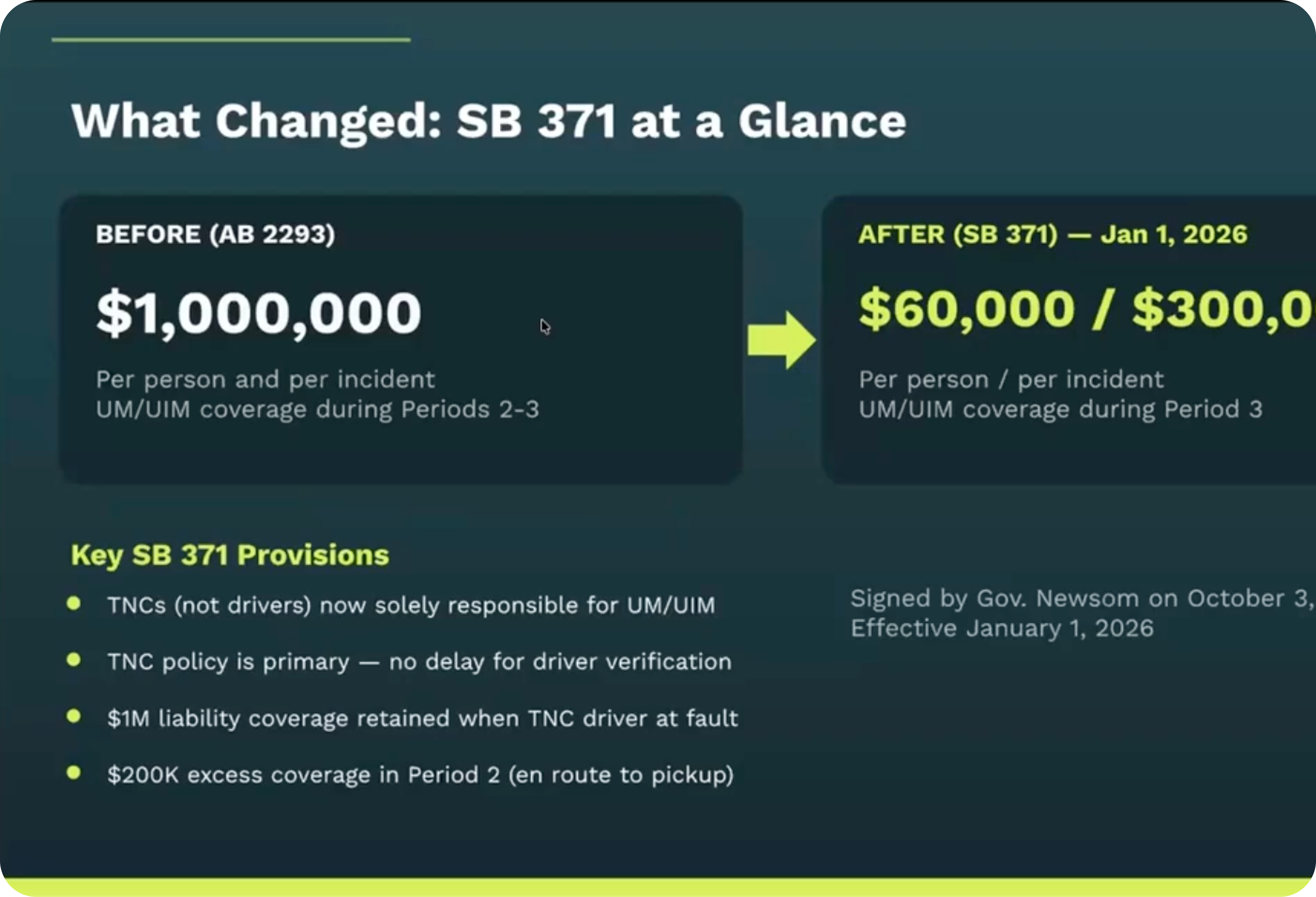
Beginning January 1, 2026, California’s SB 371 introduces dramatic changes to Uber injury claims by reducing uninsured/underinsured motorist (UM/UIM) coverage from $1 million to just $60,000 per person, while maintaining $1 million in liability coverage for at-fault Uber drivers. These reforms affect passengers, pedestrians, and other drivers in rideshare collisions and demand careful coverage analysis, precise liability determination, and strategic litigation planning.
In October 2025, Uber filed a proposed ballot initiative for the November 2026 California election titled the “Protecting Automobile Accident Victims from Attorney Self Dealing Act.” The name sounds consumer friendly. The substance is anything but.
If passed, the measure would cap contingency fees at levels that make it economically impossible to represent many injury victims, restrict how medical expenses are calculated and recovered, and increase the burden of proof on accident victims. At the same time, corporate defense spending would remain completely unrestricted. The result is a system where corporations retain unlimited legal resources while injured people lose access to theirs.
Meanwhile, Uber has already succeeded in pushing through SB 371, which reduces required rideshare uninsured and underinsured motorist coverage in California from one million dollars to just sixty thousand dollars per person effective January 1, 2026.
Taken together, these developments represent a coordinated strategy to reshape injury litigation. If the strategy succeeds in California, it could become the playbook for every state in the country.
The plaintiff bar is responding. Consumer Attorneys of California (CAOC) and the Alliance Against Corporate Abuse (AACA) have mobilized at historic speed. As CAOC President Doug Saeltzer of Walkup, Melodia, Kelly and Schoenberger has stated, this is a “wartime” moment for the plaintiff bar.
In this session, Saeltzer will explain the political and legal fight now underway, including what the initiative actually does, why it matters beyond California, and how the plaintiff bar is preparing for the 2026 battle.
Monica Burneikis of Burneikis Law will examine the real world litigation impact of SB 371, including how rideshare cases increasingly hinge on CPUC trip logs, GPS data, and driver application status to determine insurance coverage and liability.
As coverage limits shrink and cases become more data intensive, the session will also explore how artificial intelligence tools such as Supio’s legal AI platform can help firms adapt. Supio accelerates essential case preparation tasks including medical chronology generation, case analysis, and demand drafting. By organizing large volumes of medical records and case documents, AI can help attorneys uncover critical evidence faster and maintain strong settlement leverage in a rapidly changing legal environment.
What You Will Learn
- What Uber’s ballot initiative actually does and how it could change contingency fees, medical lien recovery, and access to representation.
- Why California is becoming the testing ground for a broader strategy that could affect personal injury litigation across the United States.
- How SB 371 changes rideshare injury claims, including the reduction of uninsured and underinsured motorist coverage from one million dollars to sixty thousand dollars.
- How rideshare evidence determines coverage, including CPUC trip logs, GPS data, and driver application status.
- How the plaintiff bar is responding, including the legal strategy and counter initiatives being developed ahead of the 2026 election.
- How artificial intelligence tools such as Supio can help personal injury firms adapt, including analyzing medical records, generating chronologies, drafting demands, and identifying case insights more efficiently.
- Practical steps attorneys can take now to prepare their firms and protect the rights of the clients they represent.
In addition to legislative insights, this webinar will explore how AI tools like Supio’s legal AI platform can empower personal injury practices to adapt efficiently to this new environment. Supio’s AI accelerates key workflows, from intake and medical chronology generation to demand drafting and case insights - helping firms manage complex documentation, uncover critical evidence, and strengthen settlement leverage in a landscape where coverage limits are shrinking and precision matters more than ever. Supio’s AI is tailored for personal injury law, enabling attorneys to scale caseloads, reduce manual review time, and focus on strategy and advocacy rather than tedious document processing.
Whether you’re evaluating coverage complications, refining litigation strategy, or looking to leverage AI to optimize your practice’s performance, this webinar will equip you with the insights and tools needed to thrive in the post-SB 371 era.
About the webinar
Beginning January 1, 2026, California’s SB 371 introduces dramatic changes to Uber injury claims by reducing uninsured/underinsured motorist (UM/UIM) coverage from $1 million to just $60,000 per person, while maintaining $1 million in liability coverage for at-fault Uber drivers. These reforms affect passengers, pedestrians, and other drivers in rideshare collisions and demand careful coverage analysis, precise liability determination, and strategic litigation planning.
In October 2025, Uber filed a proposed ballot initiative for the November 2026 California election titled the “Protecting Automobile Accident Victims from Attorney Self Dealing Act.” The name sounds consumer friendly. The substance is anything but.
If passed, the measure would cap contingency fees at levels that make it economically impossible to represent many injury victims, restrict how medical expenses are calculated and recovered, and increase the burden of proof on accident victims. At the same time, corporate defense spending would remain completely unrestricted. The result is a system where corporations retain unlimited legal resources while injured people lose access to theirs.
Meanwhile, Uber has already succeeded in pushing through SB 371, which reduces required rideshare uninsured and underinsured motorist coverage in California from one million dollars to just sixty thousand dollars per person effective January 1, 2026.
Taken together, these developments represent a coordinated strategy to reshape injury litigation. If the strategy succeeds in California, it could become the playbook for every state in the country.
The plaintiff bar is responding. Consumer Attorneys of California (CAOC) and the Alliance Against Corporate Abuse (AACA) have mobilized at historic speed. As CAOC President Doug Saeltzer of Walkup, Melodia, Kelly and Schoenberger has stated, this is a “wartime” moment for the plaintiff bar.
In this session, Saeltzer will explain the political and legal fight now underway, including what the initiative actually does, why it matters beyond California, and how the plaintiff bar is preparing for the 2026 battle.
Monica Burneikis of Burneikis Law will examine the real world litigation impact of SB 371, including how rideshare cases increasingly hinge on CPUC trip logs, GPS data, and driver application status to determine insurance coverage and liability.
As coverage limits shrink and cases become more data intensive, the session will also explore how artificial intelligence tools such as Supio’s legal AI platform can help firms adapt. Supio accelerates essential case preparation tasks including medical chronology generation, case analysis, and demand drafting. By organizing large volumes of medical records and case documents, AI can help attorneys uncover critical evidence faster and maintain strong settlement leverage in a rapidly changing legal environment.
What You Will Learn
- What Uber’s ballot initiative actually does and how it could change contingency fees, medical lien recovery, and access to representation.
- Why California is becoming the testing ground for a broader strategy that could affect personal injury litigation across the United States.
- How SB 371 changes rideshare injury claims, including the reduction of uninsured and underinsured motorist coverage from one million dollars to sixty thousand dollars.
- How rideshare evidence determines coverage, including CPUC trip logs, GPS data, and driver application status.
- How the plaintiff bar is responding, including the legal strategy and counter initiatives being developed ahead of the 2026 election.
- How artificial intelligence tools such as Supio can help personal injury firms adapt, including analyzing medical records, generating chronologies, drafting demands, and identifying case insights more efficiently.
- Practical steps attorneys can take now to prepare their firms and protect the rights of the clients they represent.
In addition to legislative insights, this webinar will explore how AI tools like Supio’s legal AI platform can empower personal injury practices to adapt efficiently to this new environment. Supio’s AI accelerates key workflows, from intake and medical chronology generation to demand drafting and case insights - helping firms manage complex documentation, uncover critical evidence, and strengthen settlement leverage in a landscape where coverage limits are shrinking and precision matters more than ever. Supio’s AI is tailored for personal injury law, enabling attorneys to scale caseloads, reduce manual review time, and focus on strategy and advocacy rather than tedious document processing.
Whether you’re evaluating coverage complications, refining litigation strategy, or looking to leverage AI to optimize your practice’s performance, this webinar will equip you with the insights and tools needed to thrive in the post-SB 371 era.
Register to watch
Save your spot
About the webinar
Beginning January 1, 2026, California’s SB 371 introduces dramatic changes to Uber injury claims by reducing uninsured/underinsured motorist (UM/UIM) coverage from $1 million to just $60,000 per person, while maintaining $1 million in liability coverage for at-fault Uber drivers. These reforms affect passengers, pedestrians, and other drivers in rideshare collisions and demand careful coverage analysis, precise liability determination, and strategic litigation planning.
In October 2025, Uber filed a proposed ballot initiative for the November 2026 California election titled the “Protecting Automobile Accident Victims from Attorney Self Dealing Act.” The name sounds consumer friendly. The substance is anything but.
If passed, the measure would cap contingency fees at levels that make it economically impossible to represent many injury victims, restrict how medical expenses are calculated and recovered, and increase the burden of proof on accident victims. At the same time, corporate defense spending would remain completely unrestricted. The result is a system where corporations retain unlimited legal resources while injured people lose access to theirs.
Meanwhile, Uber has already succeeded in pushing through SB 371, which reduces required rideshare uninsured and underinsured motorist coverage in California from one million dollars to just sixty thousand dollars per person effective January 1, 2026.
Taken together, these developments represent a coordinated strategy to reshape injury litigation. If the strategy succeeds in California, it could become the playbook for every state in the country.
The plaintiff bar is responding. Consumer Attorneys of California (CAOC) and the Alliance Against Corporate Abuse (AACA) have mobilized at historic speed. As CAOC President Doug Saeltzer of Walkup, Melodia, Kelly and Schoenberger has stated, this is a “wartime” moment for the plaintiff bar.
In this session, Saeltzer will explain the political and legal fight now underway, including what the initiative actually does, why it matters beyond California, and how the plaintiff bar is preparing for the 2026 battle.
Monica Burneikis of Burneikis Law will examine the real world litigation impact of SB 371, including how rideshare cases increasingly hinge on CPUC trip logs, GPS data, and driver application status to determine insurance coverage and liability.
As coverage limits shrink and cases become more data intensive, the session will also explore how artificial intelligence tools such as Supio’s legal AI platform can help firms adapt. Supio accelerates essential case preparation tasks including medical chronology generation, case analysis, and demand drafting. By organizing large volumes of medical records and case documents, AI can help attorneys uncover critical evidence faster and maintain strong settlement leverage in a rapidly changing legal environment.
What You Will Learn
- What Uber’s ballot initiative actually does and how it could change contingency fees, medical lien recovery, and access to representation.
- Why California is becoming the testing ground for a broader strategy that could affect personal injury litigation across the United States.
- How SB 371 changes rideshare injury claims, including the reduction of uninsured and underinsured motorist coverage from one million dollars to sixty thousand dollars.
- How rideshare evidence determines coverage, including CPUC trip logs, GPS data, and driver application status.
- How the plaintiff bar is responding, including the legal strategy and counter initiatives being developed ahead of the 2026 election.
- How artificial intelligence tools such as Supio can help personal injury firms adapt, including analyzing medical records, generating chronologies, drafting demands, and identifying case insights more efficiently.
- Practical steps attorneys can take now to prepare their firms and protect the rights of the clients they represent.
In addition to legislative insights, this webinar will explore how AI tools like Supio’s legal AI platform can empower personal injury practices to adapt efficiently to this new environment. Supio’s AI accelerates key workflows, from intake and medical chronology generation to demand drafting and case insights - helping firms manage complex documentation, uncover critical evidence, and strengthen settlement leverage in a landscape where coverage limits are shrinking and precision matters more than ever. Supio’s AI is tailored for personal injury law, enabling attorneys to scale caseloads, reduce manual review time, and focus on strategy and advocacy rather than tedious document processing.
Whether you’re evaluating coverage complications, refining litigation strategy, or looking to leverage AI to optimize your practice’s performance, this webinar will equip you with the insights and tools needed to thrive in the post-SB 371 era.
Register to watch
Watch the Replay
About the webinar
Beginning January 1, 2026, California’s SB 371 introduces dramatic changes to Uber injury claims by reducing uninsured/underinsured motorist (UM/UIM) coverage from $1 million to just $60,000 per person, while maintaining $1 million in liability coverage for at-fault Uber drivers. These reforms affect passengers, pedestrians, and other drivers in rideshare collisions and demand careful coverage analysis, precise liability determination, and strategic litigation planning.
In October 2025, Uber filed a proposed ballot initiative for the November 2026 California election titled the “Protecting Automobile Accident Victims from Attorney Self Dealing Act.” The name sounds consumer friendly. The substance is anything but.
If passed, the measure would cap contingency fees at levels that make it economically impossible to represent many injury victims, restrict how medical expenses are calculated and recovered, and increase the burden of proof on accident victims. At the same time, corporate defense spending would remain completely unrestricted. The result is a system where corporations retain unlimited legal resources while injured people lose access to theirs.
Meanwhile, Uber has already succeeded in pushing through SB 371, which reduces required rideshare uninsured and underinsured motorist coverage in California from one million dollars to just sixty thousand dollars per person effective January 1, 2026.
Taken together, these developments represent a coordinated strategy to reshape injury litigation. If the strategy succeeds in California, it could become the playbook for every state in the country.
The plaintiff bar is responding. Consumer Attorneys of California (CAOC) and the Alliance Against Corporate Abuse (AACA) have mobilized at historic speed. As CAOC President Doug Saeltzer of Walkup, Melodia, Kelly and Schoenberger has stated, this is a “wartime” moment for the plaintiff bar.
In this session, Saeltzer will explain the political and legal fight now underway, including what the initiative actually does, why it matters beyond California, and how the plaintiff bar is preparing for the 2026 battle.
Monica Burneikis of Burneikis Law will examine the real world litigation impact of SB 371, including how rideshare cases increasingly hinge on CPUC trip logs, GPS data, and driver application status to determine insurance coverage and liability.
As coverage limits shrink and cases become more data intensive, the session will also explore how artificial intelligence tools such as Supio’s legal AI platform can help firms adapt. Supio accelerates essential case preparation tasks including medical chronology generation, case analysis, and demand drafting. By organizing large volumes of medical records and case documents, AI can help attorneys uncover critical evidence faster and maintain strong settlement leverage in a rapidly changing legal environment.
What You Will Learn
- What Uber’s ballot initiative actually does and how it could change contingency fees, medical lien recovery, and access to representation.
- Why California is becoming the testing ground for a broader strategy that could affect personal injury litigation across the United States.
- How SB 371 changes rideshare injury claims, including the reduction of uninsured and underinsured motorist coverage from one million dollars to sixty thousand dollars.
- How rideshare evidence determines coverage, including CPUC trip logs, GPS data, and driver application status.
- How the plaintiff bar is responding, including the legal strategy and counter initiatives being developed ahead of the 2026 election.
- How artificial intelligence tools such as Supio can help personal injury firms adapt, including analyzing medical records, generating chronologies, drafting demands, and identifying case insights more efficiently.
- Practical steps attorneys can take now to prepare their firms and protect the rights of the clients they represent.
In addition to legislative insights, this webinar will explore how AI tools like Supio’s legal AI platform can empower personal injury practices to adapt efficiently to this new environment. Supio’s AI accelerates key workflows, from intake and medical chronology generation to demand drafting and case insights - helping firms manage complex documentation, uncover critical evidence, and strengthen settlement leverage in a landscape where coverage limits are shrinking and precision matters more than ever. Supio’s AI is tailored for personal injury law, enabling attorneys to scale caseloads, reduce manual review time, and focus on strategy and advocacy rather than tedious document processing.
Whether you’re evaluating coverage complications, refining litigation strategy, or looking to leverage AI to optimize your practice’s performance, this webinar will equip you with the insights and tools needed to thrive in the post-SB 371 era.
See Supio in Action
Book a demo to see all the ways Supio can help your firm maximize settlements and take on more cases.