
Using AI Responsibly: What Pennsylvania Plaintiff Attorneys Need to Know
Lundy Law trial lawyer Raymond Tarnowski and Supio’s Salim Hemdani on verification, confidentiality, and the AI disclosure rules taking shape in state courts.
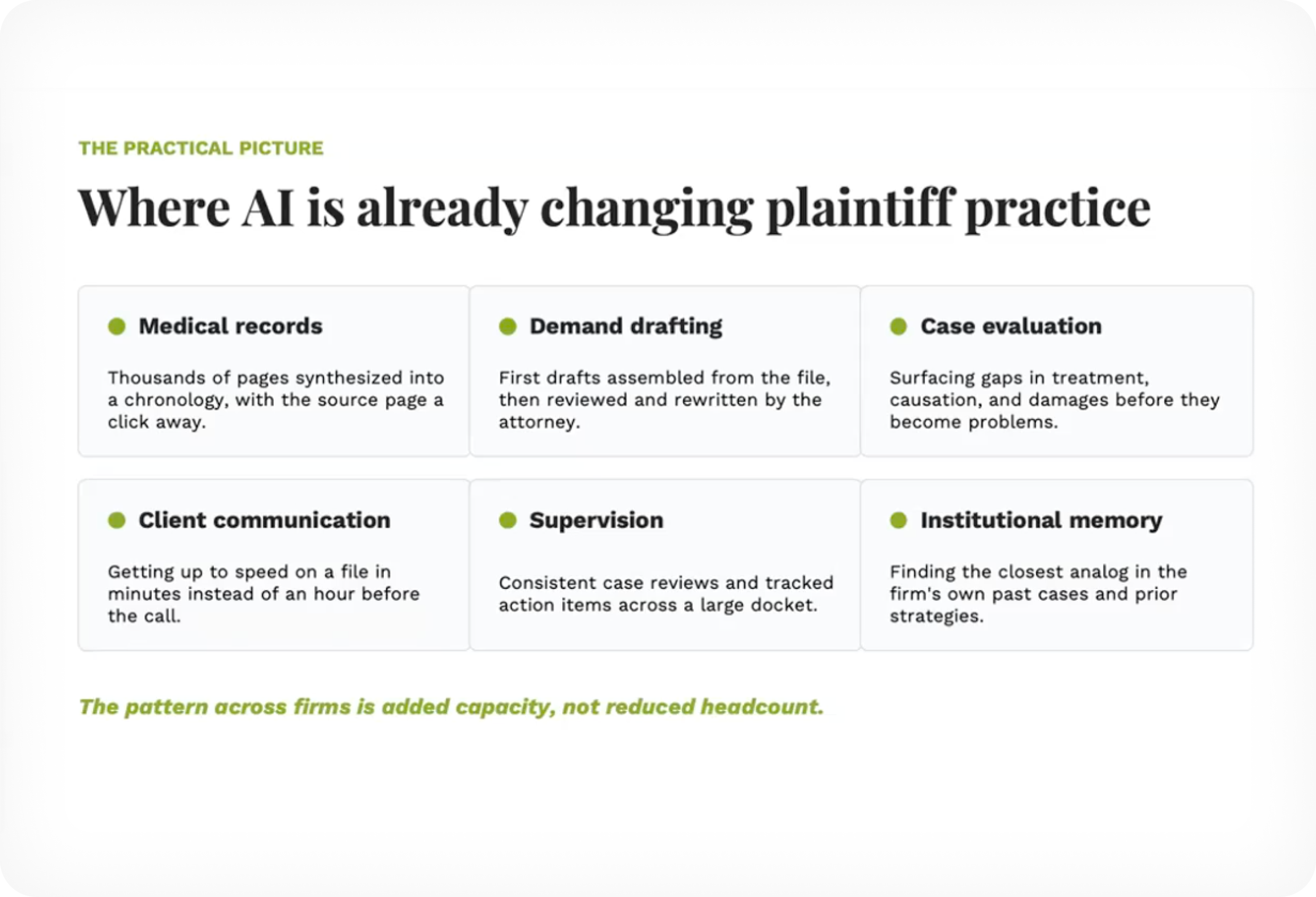
AI in the plaintiff firm has moved quickly, and many Pennsylvania attorneys are still deciding whether and how to engage. The efficiency gains are real, and so are the open questions about accuracy, confidentiality, and professional responsibility.
Recorded live on October 15, 2026, this session takes an awareness-first look at where AI is changing plaintiff practice today, where a lawyer's judgment still leads, and what recent ethics guidance means for firms weighing adoption. The through line: however capable a tool becomes, the attorney's duty to verify, supervise, and exercise independent judgment stays in place. It simply moves to a different part of the workflow.
What You'll Learn:
- Where AI is changing plaintiff practice today, and where the claims outrun the reality
- How the duties of competence, confidentiality, supervision, and candor apply to AI-assisted work
- What a defensible verification workflow looks like, from scope to sign-off
- Seven questions to ask about any AI tool, regardless of the vendor
- What Pennsylvania courts are beginning to ask for on AI disclosure and certification
Please Note: This on-demand recording is offered by Supio and is not eligible for CLE credit.
This program was originally developed and presented as a CLE for members of the Pennsylvania Association for Justice. Supio is proud to be a PAJ Gold Business Partner. This content is for educational purposes only and is not legal advice.
This session was presented to PAJ members under the title To AI or Not to AI: The State of Play for Plaintiff Firms.
Panel



See Supio In Action
Book a demo to see all the ways Supio can help your firm maximize settlements and take on more cases.